When choosing a magnet for high temperatures, it’s a common mistake to simply rely on the maximum working temperature specified on the neodymium magnet grade data sheet. This only holds true when the length-to-diameter (L/D) ratio is 0.7.
| N | M | H | SH | UH | EH |
| 80°C | 100°C | 120°C | 150°C | 180°C | 200°C |
Body Build Analogy
When explaining this concept to engineers, I frequently use the analogy of two individuals with similar weight but different body builds.
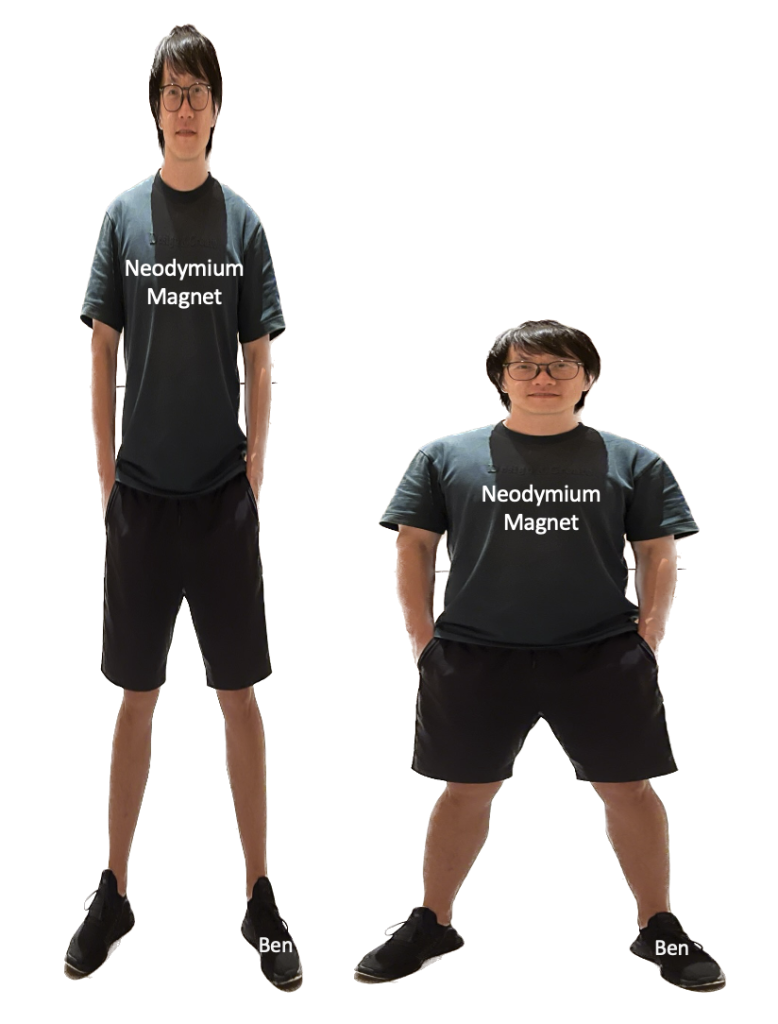
Imagine two individuals with the same weight. One is taller and leaner, while the other is shorter but has a more robust build. Now, when faced with a strong wind, the taller and leaner person is more likely to be affected, potentially losing balance faster compared to the shorter, sturdier individual.
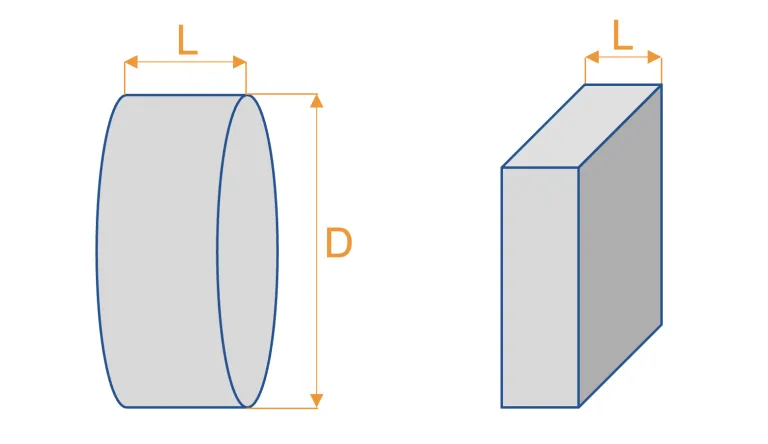
Similarly, a magnet’s performance is influenced by its shape, affecting its resistance to demagnetization from internal and external factors. In this context, “L” represents the length along its magnetization direction, and “D” indicates the diameter of the pole ends or its equivalent for non-circular poles.
L/D Ratio in High-Temperature Magnet Design
When designing a product with magnets, particularly when high-temperature demagnetization is a concern, it’s important to not only consider opting for a higher coercivity magnet but also to evaluate the possibility of increasing the L/D ratio, especially if there is flexibility in the internal space.